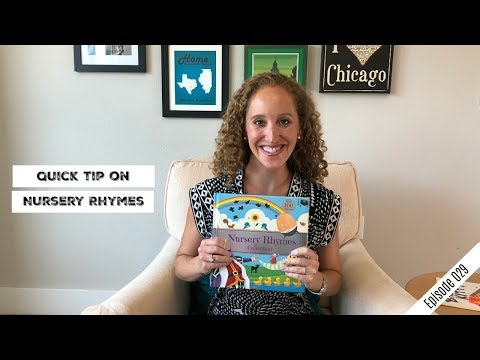
In Reading Boots Episode 029, you’ll learn why nursery rhymes are so important for emerging and beginning readers. Lots of parents tell me that once their children are older, they stop singing nursery rhymes. Don’t do that! Your child is never too old to read and sing nursery rhymes.
What’s in the video
- 0:00 Intro
- 0:14 Not just for babies and toddlers
- 0:52 Reading with expression
- 1:17 Sequencing
- 2:00 Vocabulary words
- 2:31 Use the nursery rhymes you have at home
Read the full transcriptHide the transcript
"Jack and Jill went up the hill." Howdy!
Alyse here. Thanks for tuning in to Reading Boots, and thanks for taking the time to learn something new for your child. Today I have a quick tip for you. Quick tip is: nursery rhymes aren't just for babies and toddlers. Lots of parents tell me that once their children are older, they stop reading and reciting nursery rhymes. Don't do that!
Nursery rhymes are a great way to teach beginning and emerging readers important concepts and skills. I'm going to give you three examples of concepts and skills that you can work on with nursery rhymes.
First, you can use nursery rhymes to help your child practice natural phrasing and expression. Since your child can say, "Jack and Jill went up the hill to fetch a pail of water," when it comes time to read, your child will naturally say, "Jack and Jill went up the hill." That helps your child practice reading with expression and helps your child use natural phrasing.
The second skill and concept you can teach with nursery rhymes is practicing sequencing. So you could read the nursery rhyme, "Jack and Jill went up the hill to fetch a pail of water. Jack fell down and broke his crown, and Jill came tumbling after." And then you'll ask your child what happened in the beginning of the nursery rhyme, and your child will say, "Jack and Jill went up the hill." And then you could ask what happened in the middle and what happened at the end.
The third skill and concept you can teach with nursery rhymes is vocabulary words. Nursery rhymes often have vocabulary words that we don't use in daily language, so you can take the time to point out that word and talk about what the word means. We don't usually use that word "fetch" in our daily conversation, unless you have a dog who is fetching things. So you can talk about when they went to fetch a pail of water: it means they went to go get a pail of water.
Those are three skills and concepts you can teach with nursery rhymes. You can use your favorite nursery rhymes that you have at home, or you can use this excellent collection, the Nursery Rhymes Collection. Thanks for tuning in. Get your Reading Boots on and enjoy the journey.
Why nursery rhymes matter for young readers
Nursery rhymes are short, fun to say, and easy to remember. That makes them perfect for practicing real reading skills. Children who know a rhyme by heart can focus on how they read it, not just figuring out the words. Nursery rhymes also help children hear rhyming words and the sounds in language, an important early reading skill.
3 skills to teach with nursery rhymes
1. Reading with expression. When your child already knows “Jack and Jill went up the hill to fetch a pail of water,” they’ll read it with natural phrasing and expression, the way it sounds when you say it. For more practice, see Exclamation Point, Episode 012.
2. Sequencing. After you read a rhyme, ask your child what happened at the beginning, in the middle, and at the end. Draw each part with our free Beginning, Middle, and End worksheet.
3. Vocabulary words. Nursery rhymes are full of words we don’t use every day, like fetch, pail, and tuffet. Stop and talk about what they mean. “To fetch a pail of water means to go get a pail of water.” Learn more in Vocabulary Preview, Episode 061.
8 classic nursery rhymes to read together
Jack and Jill
Jack and Jill went up the hill
To fetch a pail of water.
Jack fell down and broke his crown,
And Jill came tumbling after.
Try it (sequencing and vocabulary): Ask what happened at the beginning, middle, and end. Then talk about the word fetch: to fetch a pail of water means to go get a pail of water.
Humpty Dumpty
Humpty Dumpty sat on a wall,
Humpty Dumpty had a great fall.
All the king’s horses and all the king’s men
Couldn’t put Humpty together again.
Try it (expression): Say it the way the story feels, a little sad when Humpty “had a great fall.” Then let your child read it with the same expression.
Hey Diddle Diddle
Hey diddle diddle,
The cat and the fiddle,
The cow jumped over the moon.
The little dog laughed
To see such sport,
And the dish ran away with the spoon.
Try it (expression): Read it in your silliest voice, then let your child try. Knowing the words by heart helps them read with natural phrasing.
Twinkle, Twinkle, Little Star
Twinkle, twinkle, little star,
How I wonder what you are!
Up above the world so high,
Like a diamond in the sky.
Twinkle, twinkle, little star,
How I wonder what you are!
Try it (expression): Say it softly, with wonder in your voice, and pause at the end of each line the way you would when singing it.
Baa, Baa, Black Sheep
Baa, baa, black sheep,
Have you any wool?
Yes sir, yes sir,
Three bags full.
One for the master,
One for the dame,
And one for the little boy
Who lives down the lane.
Try it (vocabulary): Talk about the words wool and lane: wool is the soft coat a sheep grows, and a lane is a narrow road.
Hickory Dickory Dock
Hickory, dickory, dock,
The mouse ran up the clock.
The clock struck one,
The mouse ran down,
Hickory, dickory, dock.
Try it (sequencing): Ask what the mouse did first, what happened next, and how it ended.
Little Miss Muffet
Little Miss Muffet
Sat on a tuffet,
Eating her curds and whey;
Along came a spider,
Who sat down beside her
And frightened Miss Muffet away.
Try it (vocabulary): Talk about the words tuffet (a low seat), curds and whey (like cottage cheese), and frightened (scared).
The Itsy Bitsy Spider
The itsy bitsy spider
Climbed up the water spout.
Down came the rain
And washed the spider out.
Out came the sun
And dried up all the rain,
And the itsy bitsy spider
Climbed up the spout again.
Try it (sequencing): Ask what happened at the beginning, middle, and end. Where did the spider go, what happened, and what did it do at the end?
Tips by age
Ages 0 to 3: Sing and say rhymes every day, with hand motions and lots of repetition. Board books of nursery rhymes are a great place to start.
Ages 3 to 5: Pause before the rhyming word and let your child fill it in: “Humpty Dumpty sat on a… wall!” Act out the rhymes together.
Ages 5 to 8: Write a rhyme on paper and let your child read it to you, pointing to each word. Talk about the unusual words and retell the beginning, middle, and end.
More rhyming fun
- Guess the Rhyme. A quick rhyming game to play during a read aloud. Learn how in Guess the Rhyme, Episode 033.
- Robot Words. Break words into their sounds, a fun next step after rhyming. See Robot Words, Episode 015.
- Books of songs and rhymes. Find more favorites in Best Books of Songs and Rhymes.
The book from this episode
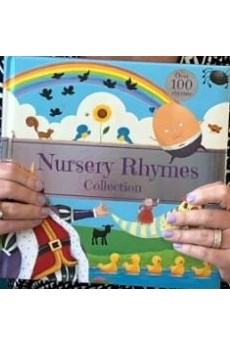
Nursery Rhymes Collection
“Nursery Rhymes Collection” is an extensive collection of classic nursery rhymes. The illustrations help the rhymes come to life. There are so many rhymes, you’re bound to learn a few new ones!
Find it on AmazonFrequently Asked Questions
Why are nursery rhymes important for children?
Nursery rhymes help children hear rhyming words and the sounds in language, learn new vocabulary, and practice reading with expression. Because they’re short and easy to remember, they’re also great for practicing retelling the beginning, middle, and end.
At what age should children learn nursery rhymes?
Start when your child is a baby, and keep going. Nursery rhymes aren’t just for babies and toddlers. They’re excellent reading practice for preschoolers and beginning readers too.
What are the most popular nursery rhymes?
Some favorites are Jack and Jill, Humpty Dumpty, Hey Diddle Diddle, Twinkle Twinkle Little Star, Baa Baa Black Sheep, Hickory Dickory Dock, Little Miss Muffet, and The Itsy Bitsy Spider.
How do I teach reading with nursery rhymes?
Pick a rhyme your child knows by heart and let them read it with you, pointing to each word. Then talk about the unusual words and ask what happened at the beginning, middle, and end.
SUBSCRIBE to my YouTube channel to stay updated on when I post new tips, strategies, and tricks of the trade. Get your Reading Boots on and enjoy the journey!